
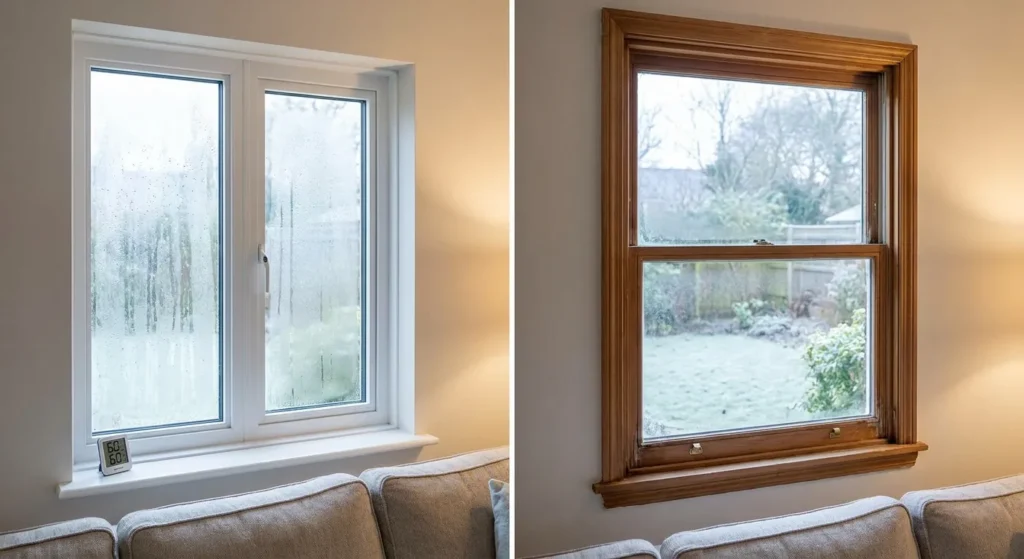
You just got new windows installed, everything looks clean and modern, and then suddenly, you notice fog forming on the inside. Naturally, the first thought is: did something go wrong?
But here’s the reality: in most cases, fogging on the inside of new windows isn’t a defect, it’s actually a sign of something working better than before.
Let’s break down what’s really happening.
Why Do New Windows Fog Up From the Inside in the First Place?
Fogging happens when warm, moist air inside your home comes into contact with a colder surface, your window glass. That temperature difference causes condensation to form.
New windows are typically more airtight than older ones. This means:
- Less air leakage
- Better insulation
- Higher indoor humidity retention
So instead of moisture escaping like it used to with older windows, it now stays inside, and settles on the glass.
If you recently upgraded through a joliet window replacement, this is actually a common adjustment phase.
Is Window Condensation a Sign of Poor Installation?
This is one of the biggest misconceptions.
Condensation on the inside surface of the glass usually has nothing to do with installation quality. In fact, it often means your windows are sealed properly.
However, installation still matters. Poor sealing can cause different issues like:
- Drafts
- Water leaks
- Fogging between glass panes (which is a real problem)
That’s why professional Vinyl Window Installation Joliet ensures the windows perform as intended without structural issues.
Why Does It Happen More in the Morning?
You’ll often notice fogging early in the day, and then it disappears.
Here’s why:
- Overnight, temperatures drop
- Indoor humidity builds up
- Glass becomes colder than the air
By morning, condensation forms. As the day warms up and airflow increases, the moisture evaporates.
This cycle is normal, especially during colder months.
When Is Fogging Actually a Problem?
Not all fogging is harmless. The key is where it appears.
Normal:
- On the inside surface of the glass
- Temporary (clears up during the day)
Concerning:
- Between the panes of double or triple-glazed windows
- Persistent fog that doesn’t go away
Fogging between panes usually means the seal has failed, allowing moisture to enter. In that case, replacement may be necessary.
If you’re dealing with that kind of issue, a proper joliet window replacement might be the long-term fix.
Do Certain Window Types Fog More Than Others?
Yes, window style and size can influence condensation.
For example:
- Larger glass surfaces collect more moisture
- Bay windows may experience more temperature variation
- Rooms with less airflow trap humidity
Homes with Bay Window Installation Joliet often notice this more because of the extended structure and exposure.
How to Reduce Fogging Without Damaging Your Windows?
You don’t need to panic, but you can control it.
Simple fixes:
- Use exhaust fans in kitchens and bathrooms
- Open windows slightly to improve airflow
- Use a dehumidifier if humidity is high
- Keep blinds slightly open to allow air circulation
If you’ve recently upgraded with Bay Window Replacement Joliet, these small adjustments can make a noticeable difference.
Is Fogging a Sign Your New Windows Are Working?
Strangely enough, yes.
Older windows allowed air to leak in and out, which prevented condensation buildup but reduced efficiency. New windows trap heat better, making your home more energy-efficient, but also holding in humidity.
So while it might seem like a problem, it’s often a side effect of improved performance.
The Bottom Line
If your new windows are fogging from the inside, it’s usually not a defect, it’s a result of better insulation and airtight sealing.
The real issue isn’t the windows, it’s indoor humidity levels.
However, if you notice fogging between panes or constant moisture buildup, that’s when it’s worth investigating further.