
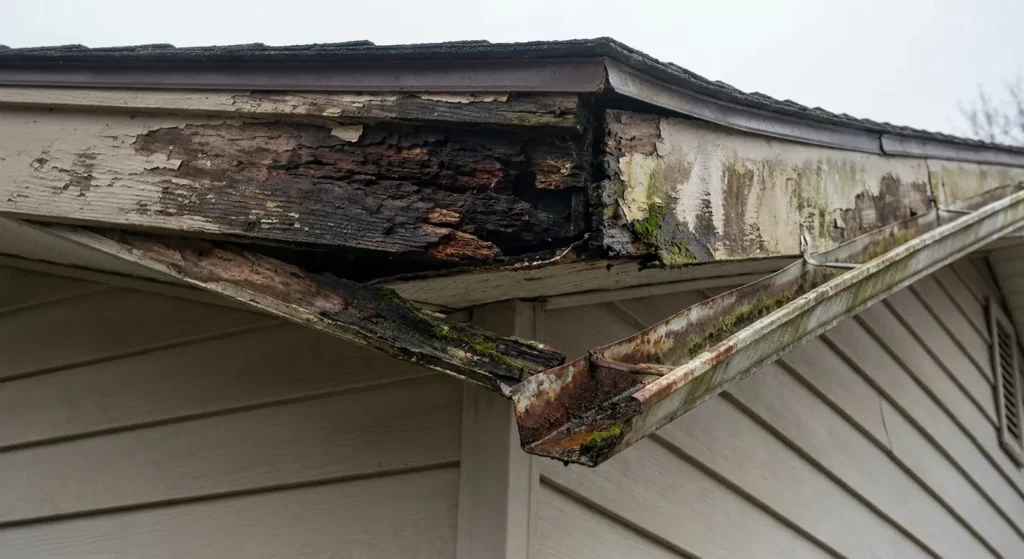
Fascia boards are easy to overlook until visible damage begins to appear along the roofline. These boards sit behind the gutters and help create a finished edge between the roof and the exterior walls. More importantly, they help protect vulnerable areas from moisture and support the gutter system.
When fascia starts to rot, homeowners often wonder whether the damaged section can simply be repaired or whether complete replacement is necessary. The answer depends on how far the damage has spread, what caused it, and the condition of the surrounding roofline.
What Causes Fascia Boards to Rot?
Water is the most common cause of fascia deterioration. Since fascia boards are located directly behind the gutters, they are regularly exposed to rainwater and moisture.
Clogged gutters can overflow and keep the fascia wet for long periods. Leaking gutter joints, damaged roof edges, missing drip flashing, and poor drainage can also allow water to reach the boards repeatedly.
Over time, constant moisture can cause wood fascia to soften, crack, and decay. Peeling paint may be one of the first warning signs, but the damage can eventually spread beneath the visible surface.
Signs Your Fascia May Need Attention
Fascia damage is not always obvious from the ground. Some problems develop slowly and become noticeable only after the gutter begins to pull away from the roofline.
Warning signs can include:
- Peeling or bubbling paint
- Dark stains along the roof edge
- Soft or crumbling sections of wood
- Sagging or loose gutters
- Visible cracks in the fascia
- Signs of pests near the roofline
- Water marks on nearby exterior walls
Homeowners considering soffits and fascia repair Joliet services should pay attention to more than the damaged board itself. The condition of the gutters, soffits, roof edge, and nearby siding can help reveal what caused the problem.
When Can Rotten Fascia Be Repaired?
A repair may be suitable when the damage is limited to a small area. For example, if a short section has been affected by a leaking gutter joint while the remaining fascia is still solid, removing and repairing the damaged area may be practical.
Minor surface damage can sometimes be addressed before deep wood rot develops. However, simply painting over a soft or decaying fascia board will not stop the deterioration.
The source of the moisture should also be corrected. Without fixing the leaking gutter, drainage issue, or roofline problem, the repaired area may become damaged again.
When Is Fascia Replacement the Better Choice?
Fascia replacement Joliet homeowners may need becomes more likely when the boards have widespread rot or can no longer support the gutter system properly.
Replacement may be the better option when:
- Several sections of fascia are soft or rotten
- Gutters are pulling away from the roof
- The damage has spread behind the visible surface
- Previous repairs have failed
- Large sections are cracked or deteriorated
- Moisture has affected nearby soffits
A full inspection is important because visible rot may only represent part of the problem. Removing a damaged section can sometimes reveal additional deterioration around the roof edge.
Why Proper Fascia Installation Matters
Replacing rotten boards is only part of the solution. Proper fascia installation Joliet homes require should also consider drainage and moisture protection.
New fascia should work together with the roof edge, gutters, soffits, and flashing. If these components are not properly aligned, water may continue to reach the boards.
The gutter system should also be securely attached without placing unnecessary strain on the fascia. Heavy debris, standing water, and ice can put additional pressure on already weakened boards.
Do Not Ignore Early Fascia Damage
Rotten fascia rarely improves on its own. What begins as peeling paint or a small soft spot can eventually affect gutters, soffits, and other parts of the exterior.
The decision to repair or replace should be based on the depth and extent of the damage. A small, isolated problem may only need targeted work, while widespread rot often requires replacement.
Checking the cause before completing the work is just as important as fixing the visible damage. Addressing gutter leaks, poor drainage, and moisture problems can help protect the new or repaired fascia and reduce the chance of the same issue returning.