
When homeowners think of window upgrades, the basement is often overlooked. Yet, choosing the right basement windows can make a huge difference in your home’s comfort, safety, and energy efficiency. Whether you’re finishing your basement or simply want to improve airflow and natural light, understanding your window options can help you make the right investment.
In this guide, we’ll cover the best basement window types, their benefits, and what to consider before installation.
1. Why Basement Windows Matter?
Basement windows are not just functional; they’re essential for ventilation, insulation, and even emergency egress. The right window can help:
- Let in natural light and make your basement feel more inviting.
- Improve air circulation and reduce dampness or musty odors.
- Enhance energy efficiency and lower heating or cooling costs.
- Meet safety codes for egress if you have a finished basement.
Before choosing a design, consider the purpose of your basement storage, living space, or recreation room as this will determine which window type is best.
2. Best Types of Basement Windows
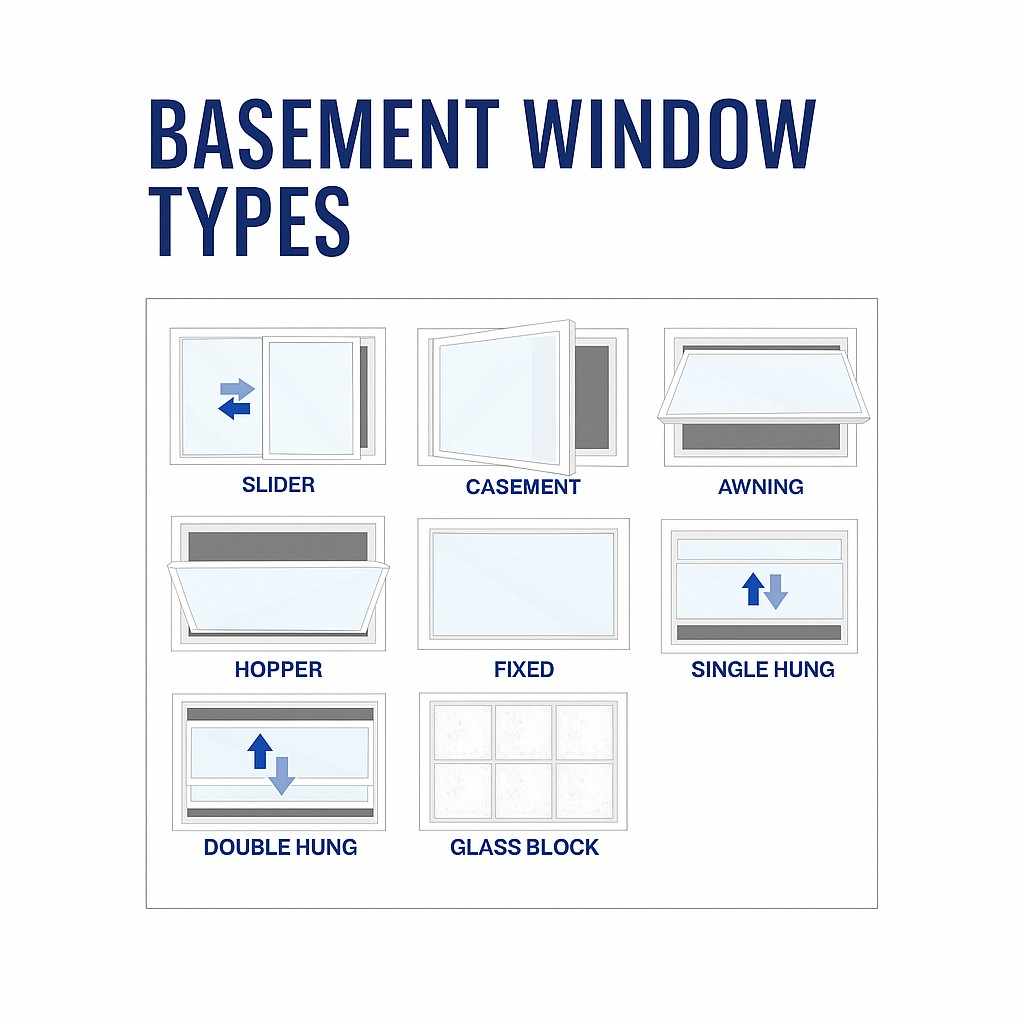
Let’s explore the most popular basement window styles that combine practicality with style.
a. Hopper Windows
Hopper windows are the most common choice for basements. They open inward from the top, making them ideal for small spaces.
Benefits:
- Great ventilation.
- Airtight when closed.
- Affordable and easy to install.
b. Awning Windows
Awning windows open outward from the bottom, providing ventilation even during rain.
Benefits:
- Weather-resistant design.
- Stylish and functional.
- Excellent light and air control.
c. Sliding Windows
If you have a larger basement space, sliding windows are a sleek option that allows more light.
Benefits:
- Easy to open and clean.
- Great for finished basements.
- Modern, low-maintenance look.
d. Egress Windows
If your basement includes a living area or bedroom, building codes may require egress windows.
Benefits:
- Safety escape route during emergencies.
- Increase home resale value.
- Bring in maximum natural light.
3. Energy Efficiency and Insulation
Since basements are prone to temperature fluctuations and moisture, energy-efficient windows are key. Choose double-pane or triple-pane windows with gas fills and low-E coatings to keep your space warm in winter and cool in summer.
For a deeper dive into different window styles and efficiency options, read our guide on Replacement Windows 101: 13 Types of Windows for Your Home.
4. Installation Tips for Basement Windows
Proper installation is crucial for preventing leaks and drafts. When replacing or installing new basement windows, make sure to:
- Measure precisely for a snug fit.
- Seal with weather-resistant caulk.
- Ensure adequate drainage to avoid water damage.
If you’re unsure, consider professional help from our Joliet Window Replacement Experts for flawless results.
5. Choosing the Right Style for Your Home
When selecting your basement windows, match them to the architecture and design of your home. For inspiration on other window types and modern designs, visit our post on Most Popular Window Types for Your Home: A Comprehensive Guide.
Final Thoughts
Basement windows may not be the first thing on your home improvement list—but they should be. The right choice can brighten your space, improve energy efficiency, and even increase property value.
Ready to upgrade your basement windows? 📞 Contact the professionals at Will County Siding and Windows for expert guidance, installation, and durable window solutions tailored to your home.